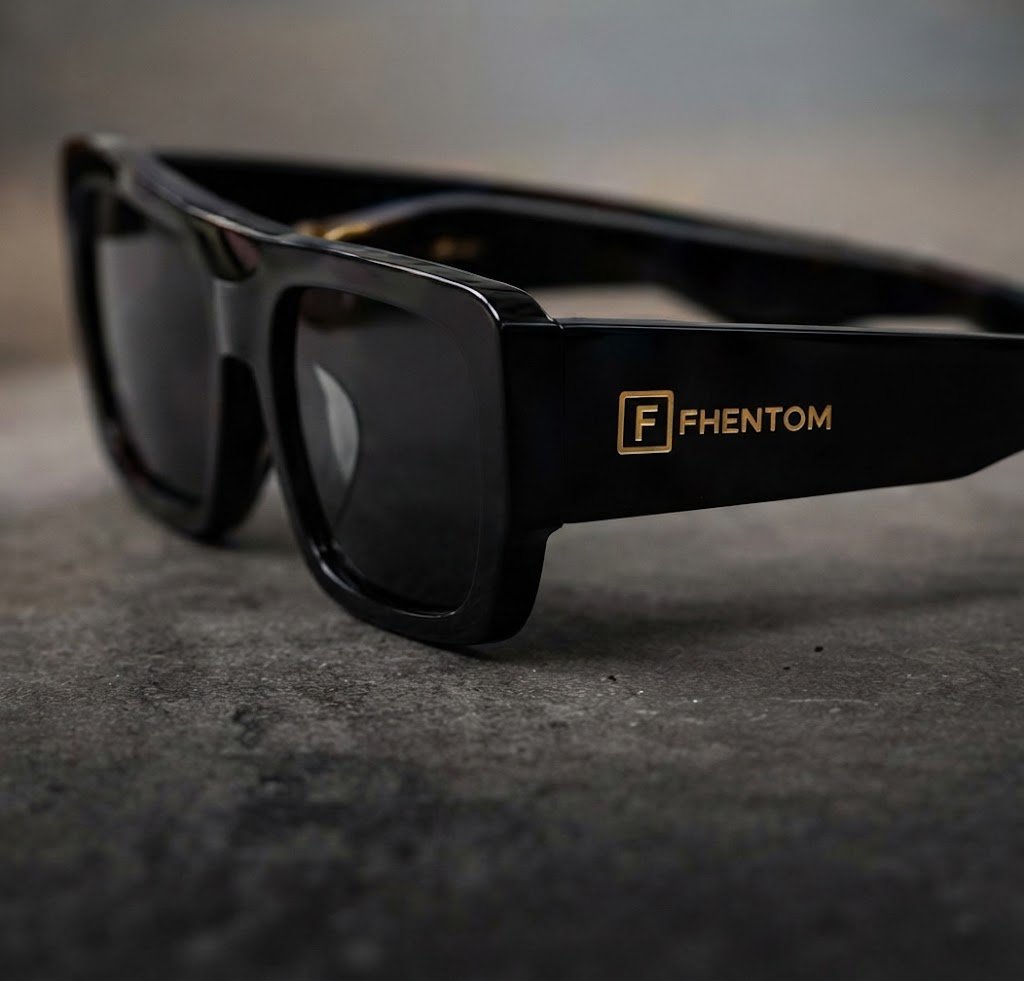
A garment forgives a millimetre. A frame does not. It sits on the most scrutinised surface a person has, and every decision about it is read instantly, whether or not the wearer could name what they are reacting to.
Proportion before style
We start with the sightline rather than the silhouette. Where does the upper rim fall against the brow? Does the bridge carry weight onto the nose or distribute it back toward the temples? Get those wrong and no amount of refinement to the outer shape will rescue the frame.
Only once the geometry behaves do we consider the expression of it: the angle of the end piece, the depth of the bevel, the exact point where an acetate front stops looking architectural and starts looking heavy.
The test of a good frame
The frames we keep are the ones the wearer forgets. After an hour there should be no pressure point behind the ear, no drift down the nose, no reason to push them back into place.
That is a harder brief than it sounds, and it is why FHENTOM Vision moves slowly. The current frames took four rounds of tooling before the weight sat where we wanted it. We expect the next to take about the same.


